
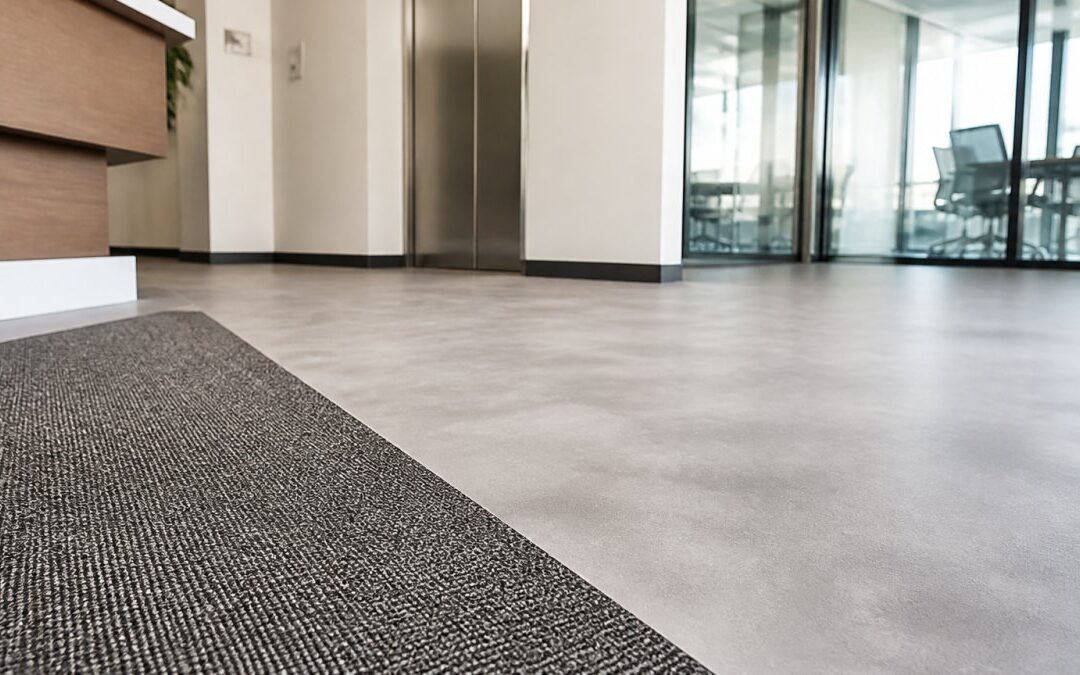
Table of Contents
- What Commercial Flooring Contractors Actually Do
- The Commercial Flooring Installation Process, Step by Step
- Why Commercial Floor Preparation Decides the Finish
- How Long a Commercial Flooring Project Timeline Really Runs
- What Drives Commercial Flooring Cost (and What You Get for It)
- How to Vet Commercial Flooring Contractors Before You Appoint
- Conclusion
- Frequently Asked Questions
Last Updated: 21 October 2026
What Commercial Flooring Contractors Actually Do
Commercial flooring contractors do far more than lay carpet or vinyl. They survey the site, specify materials that suit the building’s use, prepare the subfloor, manage the programme, and hand back a floor that survives daily wear. Getting that sequence right is what separates a smooth project from an expensive rework.
We have spent over 15 years fitting floors in workplaces, healthcare settings, education and hospitality, and the pattern is consistent: the contractors who cause problems are the ones who treat installation as the whole job.
Beyond fitting: the responsibilities that decide project success
A specialist contractor owns four things a general builder often does not. First, a proper site survey, including moisture testing on the subfloor. Second, a written specification that matches the material to the traffic and hygiene demands of the space. Third, subfloor preparation, which we cover in detail below. Fourth, aftercare: advising on cleaning regimes and returning to fix snags.
Miss any one of those and the finish fails early. The British Standards Institution’s guidance on flooring standards is a useful reference when checking what a contractor should be specifying against.
The most common failure is a contractor who skips moisture testing before laying. Trapped moisture lifts adhesive within months, and the rework costs more than the original installation.
The Commercial Flooring Installation Process, Step by Step
The commercial flooring installation process runs in two phases: survey and specification, then installation and handover. Most projects take between three days and three weeks depending on area, material and drying times, and the survey phase is where the real risk sits.
Survey, specification and programme
A thorough survey records floor area, substrate condition, moisture readings, access routes and any lift or loading restrictions. From that, the contractor builds a specification and a programme that fits around your operating hours. For healthcare and 24/7 facilities, out-of-hours fitting is often the only workable option.
Installation, handover and aftercare
Installation begins with preparation, not product. Once the subfloor is sound and dry, the chosen material goes down, edges and thresholds are finished, and the site is cleaned. Handover should include a maintenance schedule and a named contact for snags.
| Phase | Typical Duration | What Happens |
|---|---|---|
| Survey and moisture testing | 1-2 days | Site measured, substrate assessed, readings recorded |
| Specification and programme | 2-5 days | Materials agreed, phasing planned around operations |
| Subfloor preparation | 1-3 days | Levelling, repair, priming, drying time allowed |
| Installation | 2-10 days | Fitting, edges, thresholds, protection |
| Handover and aftercare | 1 day | Inspection, maintenance advice, snag process agreed |
Why Commercial Floor Preparation Decides the Finish
Commercial floor preparation decides whether the finished floor lasts. Adhesive needs a clean, dry, flat substrate to bond properly, and any weakness in the subfloor telegraphs through the surface within weeks. No material, however expensive, compensates for poor preparation.
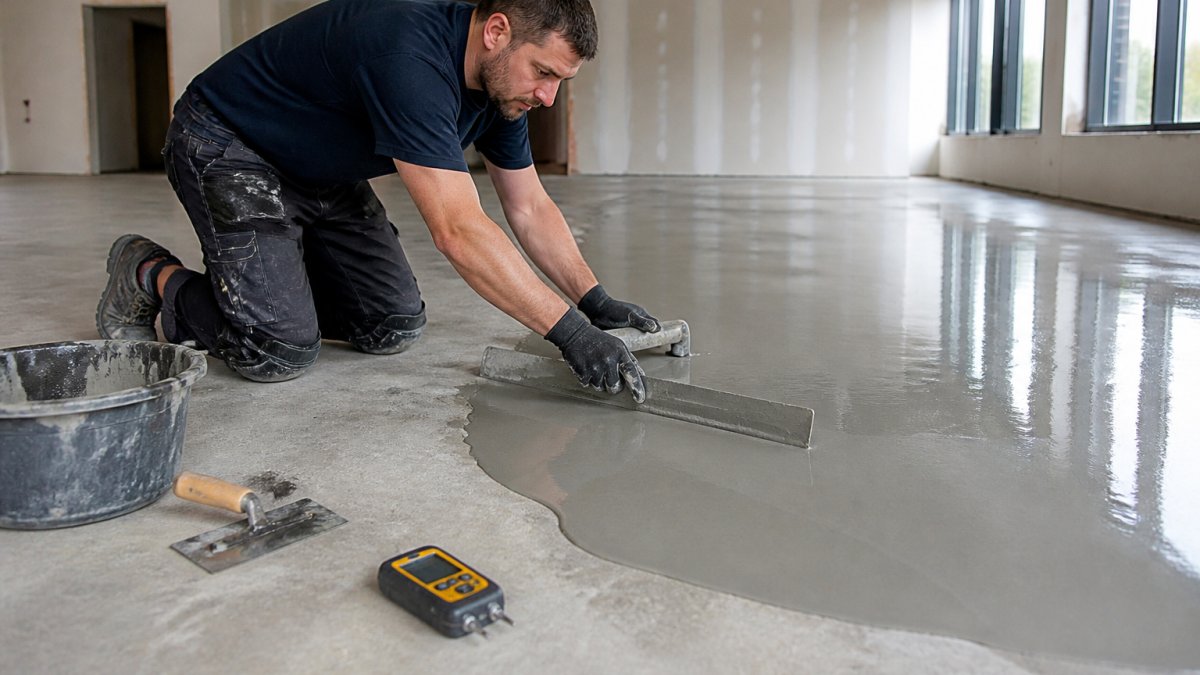
In practice, this means moisture testing, mechanical grinding or shot-blasting to remove contamination, filling cracks and voids, priming, then applying a levelling compound and letting it cure fully. Rushing the cure is the mistake nobody admits to and everybody notices later.
Ask to see the moisture readings in writing before installation starts. A contractor who cannot produce them has either skipped the test or is guessing.
How Long a Commercial Flooring Project Timeline Really Runs
A commercial flooring project timeline is driven by three things: total area, drying and cure times, and how much of the space you can hand over at once. A single-room refit can complete in days; a phased multi-floor programme runs for weeks.
The timeline most clients underestimate is drying. Adhesive and levelling compounds need time before traffic, and that time cannot be compressed. Phasing work out of hours extends the calendar but protects your operation. Programmes are planned backwards from your busiest periods rather than forwards from the start date.
What Drives Commercial Flooring Cost (and What You Get for It)
Commercial flooring cost depends on material choice, subfloor condition, area, access, and whether work runs out of hours. There is no meaningful per-square-metre figure without a survey, because preparation can vary enormously between two rooms of the same size.
Cheaper quotes usually cut preparation, use thinner materials, or fit during working hours with less protection. Paying more typically buys tested subfloor work, better materials and a contractor who returns for snags. Quotes are provided after a survey rather than over the phone, and the team is happy to explain line by line what you are paying for.
How to Vet Commercial Flooring Contractors Before You Appoint
Vetting commercial flooring contractors comes down to evidence: written surveys, moisture readings, references from similar buildings, and a clear snag process. Ask for installations you can visit that are five or more years old. A floor that still performs after a decade tells you more than any brochure.
Questions that separate specialists from general builders
- Can you show written moisture readings from your last three projects?
- Which installations can I visit that are at least five years old?
- How do you phase work around a 24/7 operation?
- What is your snag response time, in writing?
- Who supervises the subfloor preparation, and what are their qualifications?
- What maintenance regime do you recommend for this material?
The strongest signal of a reliable contractor is not price or portfolio, it is whether they insist on surveying before quoting. A contractor willing to price blind is a contractor willing to cut corners.
Conclusion
Choosing the right contractor is the difference between a floor that performs for a decade and one that fails in a year. If you are planning a fit-out and want the preparation, installation and aftercare handled properly, RW Flooring offers over 15 years of specialist experience, out-of-hours fitting to protect your operation, and complete solutions from subfloor preparation to final installation. Request a quote and we will survey first, price second.
Frequently Asked Questions
What does a commercial flooring contractor do that a general builder doesn’t?
A specialist handles the whole package: subfloor moisture testing, surface preparation, screeding or self-levelling, specification of contract-grade products, fitting, and handover documentation. General builders often skip preparation steps such as damp-proof membrane checks, which is why failures appear months later. Ask any commercial flooring contractor for their preparation method statement and examples of installations still in service after five years.
Can commercial flooring be installed outside normal business hours?
Yes. Out-of-hours fitting is standard practice for occupied buildings such as clinics, schools and hotels. Work is phased into evenings, weekends or holiday closures, with materials acclimatised and noise-generating preparation scheduled away from core hours. Confirm the contractor’s insurance covers night work and that they can store materials securely on site between shifts.
How long does a commercial flooring installation take?
A single meeting room may take a day; an open-plan office of 500 square metres typically runs three to five working days once preparation is complete. The commercial flooring project timeline depends on moisture readings, screed curing times (which can add days), adhesive cure before furniture returns, and phasing around occupants. Ask for a programme with preparation, fitting and handover dates separated so you can plan access.
What should I ask about commercial flooring cost before signing?
Ask what the quote includes: moisture testing, subfloor repair, screeding, uplift and disposal of old flooring, out-of-hours labour, and waste removal. A cheap headline rate often excludes preparation, which is where most of the risk sits. Request a breakdown by area and specification, and confirm whether the price holds if moisture readings require a damp-proof membrane.