
Table of Contents
- Why Durable Flooring Matters in Schools
- Safety and Wellbeing Benefits of Durable Flooring
- Best Flooring for Schools: Material Options
- Rubber Flooring for Schools: Durability and Performance
- Long-Lasting Flooring Materials: Cost Efficiency Over Time
- School Flooring Maintenance: Protecting Your Investment
- Minimising Disruption: Professional Installation for Educational Spaces
- Frequently Asked Questions
Last Updated: 22 October 2026
Why Durable Flooring Matters in Schools
Schools face among the most demanding environments for any flooring type. Thousands of footsteps daily, spilled drinks, dropped equipment, and constant movement create wear patterns that would challenge ordinary surfaces within months. Durable flooring in schools isn’t a luxury, it’s a practical necessity that protects both the physical space and the people using it.
The right flooring choice determines how long your investment lasts and what you’ll spend maintaining it. A poorly selected surface might look acceptable on day one but deteriorate rapidly under real-world school conditions. Conversely, properly specified durable flooring can perform reliably for a decade or more with sensible care.
We’ve worked with school business managers across the country installing the durable flooring schools need, and we’ve seen both scenarios firsthand. The difference comes down to understanding what “durable” actually means in an educational setting, and choosing materials that match those demands.
Safety and Wellbeing Benefits of Durable Flooring
Children’s safety depends partly on what’s beneath their feet. Durable flooring materials resist the damage that creates hazards, cracked surfaces, loose edges, and deteriorating areas where trips and falls become more likely.
Quality durable flooring also manages moisture effectively. Kitchens, changing rooms, and outdoor entrances bring water indoors constantly. Flooring that resists water ingress prevents the soft spots and mould growth that compromise both safety and indoor air quality. When floors stay structurally sound, the risk of accidents decreases measurably.
Acoustic properties matter too. Durable materials can be selected to reduce noise transmission between classrooms, which supports concentration and reduces stress for staff and students. Some durable options absorb impact better than hard alternatives, providing comfort during the hours children spend on their feet.
Hygiene is non-negotiable in schools. Durable flooring that seals properly and resists bacterial growth makes cleaning more effective. You can maintain genuinely hygienic surfaces rather than fighting against materials that trap dirt in cracks and seams.
Best Flooring for Schools: Material Options
Several material categories deliver durability in school environments. Understanding their strengths helps you select what works for specific areas within your building.
Vinyl and luxury vinyl offer excellent durability at moderate cost. These materials resist moisture, staining, and impact damage effectively. They’re easy to clean and maintain, which matters when you’re managing high traffic. Installation is straightforward, and repairs are simple when damage does occur.
Polished concrete provides exceptional durability and requires minimal maintenance. It’s cost-effective long-term and handles heavy traffic without degrading. The main consideration is slip resistance, you’ll need to specify finishes that meet safety standards for wet areas.
Rubber flooring performs exceptionally well in schools, particularly in corridors, gymnasiums, and changing areas. We’ll cover rubber flooring for schools in detail below, as it’s become increasingly popular for educational settings.
Ceramic tile delivers durability and easy cleaning but can be cold underfoot and noisy. It works well in kitchens and wet areas where moisture exposure is constant.
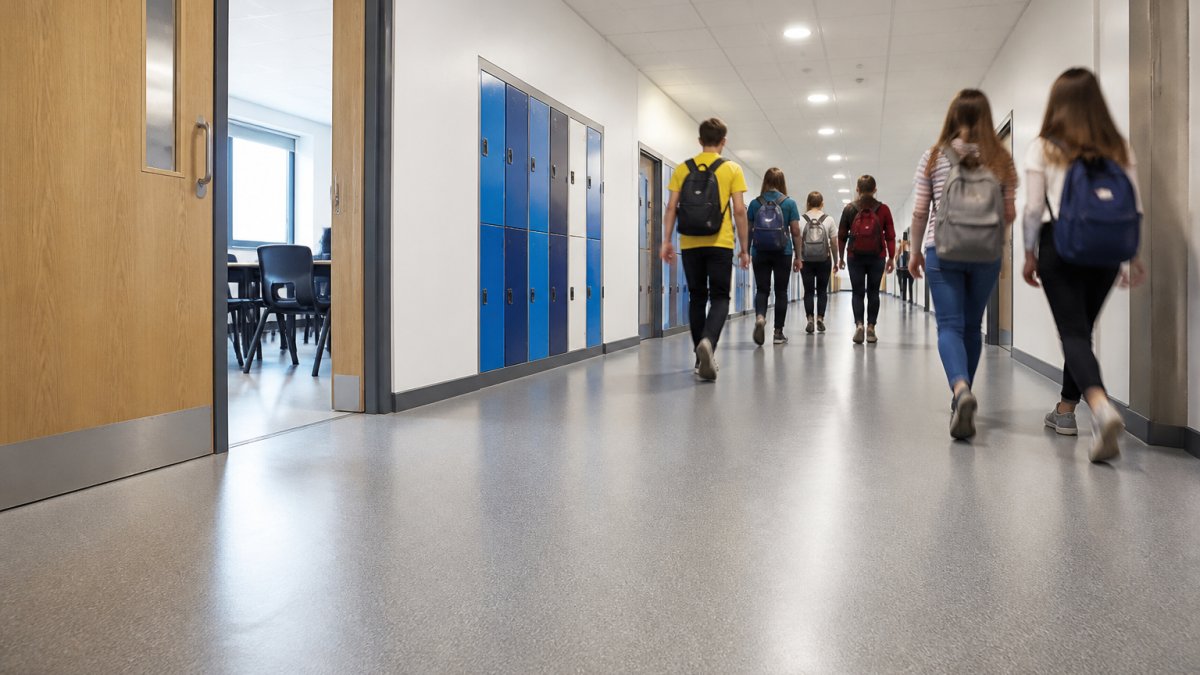
The choice depends on your specific areas. A reception area has different demands than a gymnasium or science lab. Selecting the right material for each zone maximises both performance and value.
Rubber Flooring for Schools: Durability and Performance
Rubber flooring for schools has earned its reputation through genuine performance. It absorbs impact, reducing noise and protecting joints during physical activity. Children benefit from the comfort underfoot, and staff appreciate the quieter environment.
Rubber is inherently slip-resistant, which addresses a major safety concern in educational settings. It maintains grip even when wet, making it ideal for changing areas and kitchens. The material resists staining and absorbs impact from dropped equipment without cracking or denting.
Installation of rubber flooring for schools requires proper subfloor preparation to ensure longevity. This is where professional expertise becomes essential. A poorly prepared base will eventually show through as surface irregularities, even if the rubber itself remains undamaged. RW Flooring’s experience with educational facilities means we understand exactly how to prepare substrates so rubber flooring performs for years.
Maintenance is straightforward. Regular sweeping and occasional damp mopping keep rubber flooring for schools in excellent condition. It doesn’t require specialist treatments or expensive products. Many schools find their cleaning budgets actually decrease once rubber flooring is installed, because the material responds to standard cleaning methods.
The environmental profile appeals to many schools. Rubber flooring often contains recycled content, and the material itself is recyclable at end-of-life. This supports sustainability goals without compromising performance.
Long-Lasting Flooring Materials: Cost Efficiency Over Time
Initial cost tells only part of the story. Long-lasting flooring materials deliver value through reduced replacement frequency and lower maintenance demands over their lifespan.
Consider a typical school corridor. A cheaper, less durable surface might need replacement every 5-7 years. Long-lasting flooring materials might perform reliably for 12-15 years or longer. The total cost of ownership, including removal, disposal, installation labour, and disruption, heavily favours the durable option.
Maintenance costs compound over time. Surfaces that chip, crack, or stain require frequent repairs. Long-lasting flooring materials designed for school environments resist these problems, reducing your annual maintenance budget. Staff time spent managing flooring issues also decreases.
Energy efficiency can factor in too. Some long-lasting flooring materials provide better thermal properties, potentially reducing heating costs. Others improve lighting reflection, which reduces electricity demand for artificial lighting.
The intangible benefit of reliability shouldn’t be overlooked. When your flooring performs consistently, you avoid emergency repairs that disrupt the school day. Lessons aren’t interrupted by contractors fixing damaged areas. This stability matters for educational continuity and staff peace of mind.
School Flooring Maintenance: Protecting Your Investment
Proper maintenance extends the life of any durable flooring significantly. A maintenance plan doesn’t need to be complex, consistency matters more than intensity.
Daily sweeping removes grit that can scratch surfaces. Weekly mopping with appropriate products keeps flooring clean without damaging the finish. For rubber flooring or vinyl, standard neutral cleaners work well. Avoid harsh chemicals that can degrade materials over time.
Address spills promptly. Water left standing on flooring can penetrate seams or edges, even in durable materials. Quick cleanup prevents this problem. Similarly, salt and chemical residues from outdoor areas should be cleaned regularly to prevent surface degradation.
Preventative measures reduce damage significantly. Entrance matting catches moisture and dirt before they reach main flooring. This simple step extends the life of school flooring maintenance budgets by reducing cleaning frequency and preventing moisture-related damage.
Inspect flooring regularly for early signs of wear. Small issues caught early are far cheaper to address than allowing problems to develop. A quarterly walk-through identifying any loose seams, minor damage, or areas needing attention allows you to schedule repairs during planned maintenance windows rather than responding to emergencies.
Establish a cleaning schedule and assign responsibility clearly. When nobody specifically owns the task, maintenance often slips. A simple checklist ensures nothing gets overlooked.
Minimising Disruption: Professional Installation for Educational Spaces
Installation timing and execution significantly impact your school’s operations. Poor planning can disrupt classes and activities for weeks. Professional installation minimises this disruption through careful scheduling and efficient execution.
Out-of-hours fitting is essential for educational facilities. RW Flooring schedules installations during holidays, weekends, or after-school hours so classes continue uninterrupted. This approach requires coordination and planning, but it’s the only way to install flooring without compromising educational delivery.
Proper subfloor preparation is critical but often takes longer than the flooring installation itself. This preparation work can often be scheduled separately from the final flooring installation, spreading disruption across multiple windows rather than requiring one long closure.
Professional installers understand how to manage the logistics of working in occupied buildings. They know how to protect other areas, manage dust and noise, and work safely around school operations. This expertise prevents the damage that amateur installations sometimes cause to adjacent spaces.
Quality workmanship during installation determines how long your flooring will actually perform. Seams must be sealed properly. Transitions must be secure. Expansion joints must be positioned correctly. These details separate installations that last 15 years from those that fail after 5.
Durable flooring in schools is an investment in safety, functionality, and long-term value. The right material selection, combined with professional installation and sensible maintenance, creates spaces that perform reliably for years. When you’re selecting durable flooring for your school, proper preparation and expert installation make the difference between a surface that merely looks acceptable and one that genuinely delivers on its promise. RW Flooring brings over 15 years of experience installing durable flooring in educational settings, with the expertise to handle subfloor preparation, material selection, and professional fitting that minimises disruption to your school day. Request a quote and discover how quality installation protects your investment.
| Flooring Type | Best For | Durability | Maintenance Ease |
|---|---|---|---|
| Rubber | Corridors, gymnasiums, changing areas | 12-15 years | Simple, standard cleaning |
| Vinyl | General classrooms, offices | 10-12 years | Easy, responds to standard cleaners |
| Polished concrete | High-traffic areas, cost-conscious budgets | 15+ years | Minimal, regular sweeping |
| Ceramic tile | Kitchens, wet areas | 15+ years | Easy, requires grout maintenance |
Frequently Asked Questions
What are the main benefits of durable flooring in schools?
Durable flooring reduces replacement frequency, lowers maintenance costs, and improves safety for students and staff. High-quality materials withstand constant foot traffic, spills, and impact without deteriorating. Schools benefit from fewer disruptions to learning, extended service life (often 10-15 years or more), and surfaces that meet hygiene and safety standards. Durable floors also maintain their appearance longer, creating a professional learning environment that reflects well on the institution.
Which flooring materials last longest in schools?
Rubber, vinyl composite tile (VCT), and polished concrete are among the longest-lasting options for school environments. Rubber flooring resists impact and moisture, and offers excellent slip resistance. VCT provides durability and ease of maintenance, whilst polished concrete suits modern facilities seeking industrial aesthetics with minimal upkeep. The best choice depends on specific areas: rubber for gymnasiums and corridors, vinyl for classrooms, and specialist surfaces for kitchens or science labs.
How does durable flooring reduce maintenance costs in schools?
Durable materials require fewer repairs and replacements, directly lowering long-term expenditure. High-quality surfaces resist staining, scratching, and wear, meaning less frequent deep cleaning and refinishing. Schools avoid emergency repairs that disrupt schedules and require costly labour. Proper installation from the outset, including correct subfloor preparation, prevents costly rework. Investing in durable flooring typically delivers significant savings compared to replacing cheaper, lower-quality surfaces multiple times.
Is rubber flooring suitable for all areas of a school?
Rubber flooring excels in high-traffic zones such as corridors, gymnasiums, sports halls, and recreational areas due to its durability, shock absorption, and slip resistance. It’s also suitable for science labs and practical rooms where impact and spills occur regularly. However, other materials may be more appropriate for classrooms where acoustic properties and aesthetics take priority, or for kitchens where food-grade hygiene standards apply. A professional flooring contractor can assess each area and recommend the optimal material combination for your school’s specific needs.