
Last Updated: October 26, 2026
Quick Summary
The best durable and long-lasting hygienic flooring installations are won or lost before the first tile is laid, because most failures are installation failures rather than wear failures. A cheap floor fitted properly will outlast an expensive floor fitted badly, so subfloor preparation, moisture testing and coved detailing matter more than the material you choose.
- Hygienic flooring needs a seamless or tightly jointed surface, coved skirting and imperviousness to water and cleaning chemicals.
- Sheet vinyl is only as good as the subfloor beneath it, as any bump or hollow telegraphs through within months.
- Standard epoxy can become slippery when wet, so specify an anti-slip aggregate.
- Porcelain tile’s weak point is grout, which collects dirt and needs sealing and regular attention.
- A common mistake is skipping the moisture test to save a day, which costs far more later.
Table of Contents
- Why Hygienic Flooring Fails Before It Wears Out
- Hygienic Compliance Requirements Your Floor Must Meet
- Seven Durable Flooring Options for Hygienic Environments
- Commercial Flooring Installation: Step-by-Step for a Compliant Finish
- Hygienic Flooring for Healthcare: What Clinics and Care Homes Need
- Your Flooring Installation Quality Checklist
- Commercial Flooring Maintenance That Extends Service Life
- Request a Site Survey and Quote from RW Flooring
- Frequently Asked Questions
Why Hygienic Flooring Fails Before It Wears Out
Most hygienic flooring failures are not wear failures. They are installation failures. At RW Flooring, we see this pattern constantly: a floor specified correctly, bought at the right price, then let down by a subfloor that was never properly prepared. The joints lift. Water gets underneath. Bacteria find somewhere to live.
The surface looks fine for a year. Then the problems start.
Here is the uncomfortable truth most guides skip: a cheap floor fitted properly will outlast an expensive floor fitted badly. Every time. The best durable and long-lasting flooring installations for hygienic compliant installation are won or lost before the first tile is laid.
So before we look at materials, we need to look at what actually makes a floor fail.
Hygienic Compliance Requirements Your Floor Must Meet
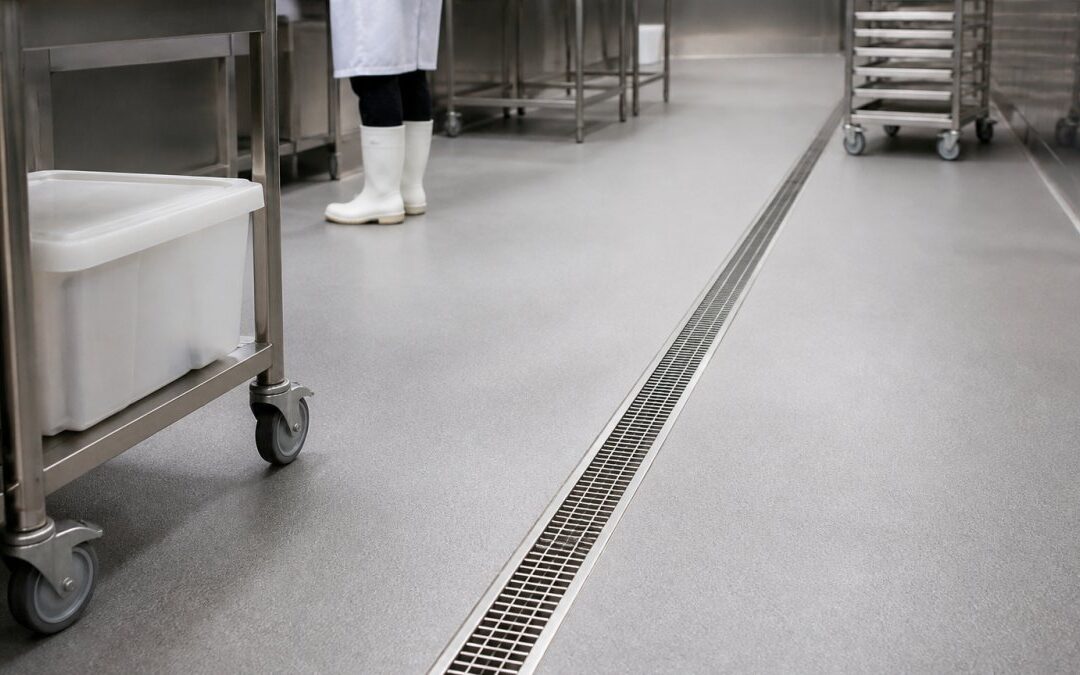
Hygienic flooring is a floor surface designed to be cleaned easily, resist moisture and chemicals, and prevent dirt or bacteria from collecting in gaps and joints. In practice, compliance comes down to a short list of requirements:
- A seamless or tightly jointed surface with no cracks, gaps or crevices where soil collects
- Coved skirting where the floor meets the wall, so there is no dirt trap at the edge
- Impervious to water and cleaning chemicals across the full surface
- Slip resistance appropriate to the area, including when wet
- Resistance to impact and point loads in high-traffic zones
For healthcare settings, the Department of Health’s health building notes set out the standard expected for floor finishes in clinical areas. You can read the current guidance through the Department of Health health building notes. Check the specific note for your facility type before specifying anything.
Watch out: a floor can pass every material test on paper and still fail an inspection because the detailing at the wall junction was rushed. Compliance lives in the edges.
Seven Durable Flooring Options for Hygienic Environments
No single material suits every space. The right choice depends on traffic, chemical exposure, subfloor condition and budget. Here are seven options that hold up in hygienic settings, with the trade-offs stated honestly.
| Floor Type | Best For | Watch Out For |
|---|---|---|
| Sheet vinyl | Clinics, kitchens, corridors | Subfloor must be flawless |
| Vinyl tile | Offices, retail, back-of-house | More joints than sheet |
| Epoxy resin | Food production, wet areas | Can be slippery when wet |
| Polyurethane screed | Heavy traffic, thermal shock | Longer cure time |
| Rubber | Schools, gyms, care homes | Limited chemical resistance |
| Porcelain tile | Washrooms, entrance areas | Grout lines need sealing |
| Polished concrete | Warehouses, industrial | Requires sealing for hygiene |
Sheet Vinyl and Safety Vinyl
Sheet vinyl is the workhorse of hygienic flooring. Fewer seams mean fewer places for dirt to hide. Safety vinyl adds a textured surface for slip resistance in wet areas. It is warm underfoot and quiet, which matters in care homes and clinics.
Where it falls short: sheet vinyl is only as good as the subfloor beneath it. Any bump or hollow telegraphs through within months.
Homogeneous and Heterogeneous Vinyl Tile
Vinyl tile gives you flexibility and easy repair. Damaged tiles can be swapped without replacing the whole floor. Homogeneous tile has the same composition throughout its thickness, so wear does not expose a different layer. Heterogeneous tile has a printed wear layer on top.
The trade-off is joints. More joints mean more cleaning attention. Specify tight joints and a quality adhesive.
Epoxy Resin Systems
Epoxy gives you a seamless, hard-wearing surface that resists chemicals and cleans down easily. It is a strong pick for food production areas and wet rooms. Coved detailing is straightforward, which helps with compliance.
The drawback: standard epoxy can become slippery when wet, so specify an anti-slip aggregate. It also needs a properly prepared, dry subfloor to bond.
Polyurethane Screed and Flowable Resin
Polyurethane screed handles thermal shock and heavy traffic better than standard epoxy. It is a common choice in commercial kitchens and areas that get washed down regularly. Flowable resin gives a smooth, seamless finish.
It takes longer to cure than some alternatives, so plan the programme around it. Out-of-hours fitting helps here.
Rubber Flooring
Rubber is quiet, comfortable underfoot and hard-wearing. It suits schools, gyms and care home corridors where falls are a concern. It comes in sheet and tile form.
Where it falls short: rubber has limited resistance to some chemicals and oils. Check compatibility with your cleaning regime before committing.
Porcelain and Ceramic Tile
Porcelain tile is tough, water-resistant and easy to clean. It handles heavy traffic and looks sharp in washrooms and entrance areas. Ceramic is softer and better suited to lighter use.
The weak point is grout. Grout lines collect dirt and need sealing and regular attention. In a truly hygienic space, that is a real maintenance commitment.
Polished Concrete and Sealed Screed
Polished concrete is exceptionally durable and handles heavy loads. Sealed correctly, it gives a smooth, cleanable surface for warehouses and industrial spaces.
The catch: it must be sealed. Unsealed concrete is porous and will absorb spills. Sealer needs periodic renewal to keep its hygienic performance.
Commercial Flooring Installation: Step-by-Step for a Compliant Finish
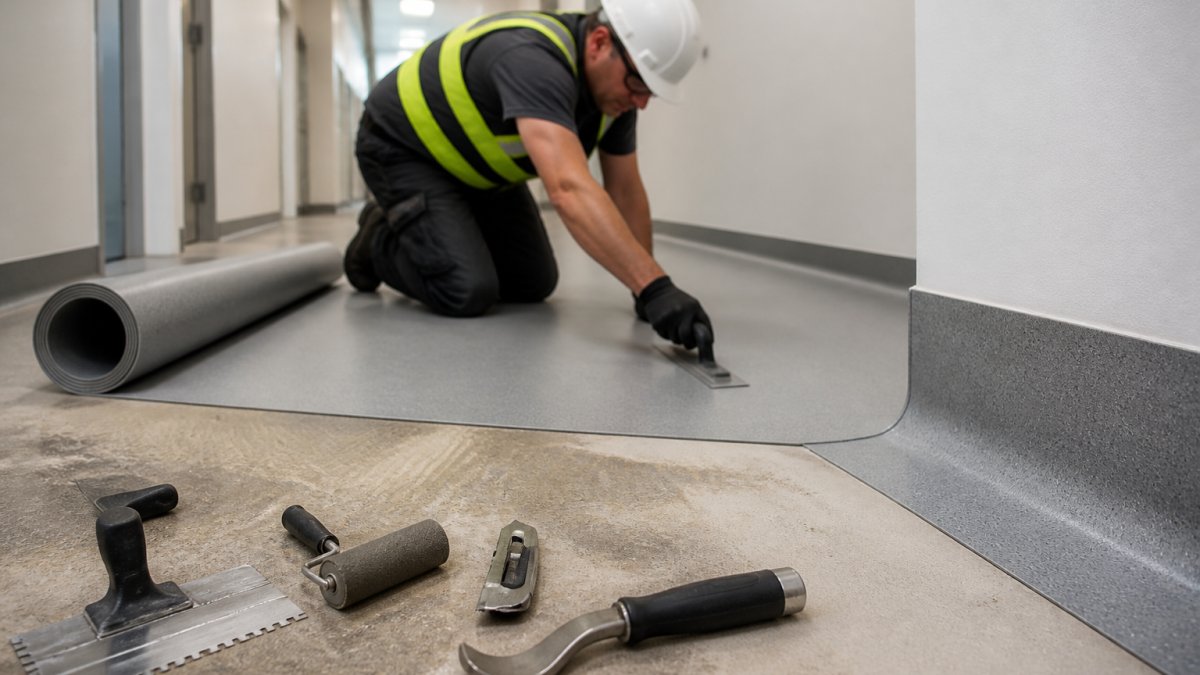
Commercial flooring installation is the process of preparing the subfloor, laying the specified material and finishing the edges and joints to a standard that meets hygiene requirements. Get the sequence right and the floor lasts. Get it wrong and no material will save you. Here is how a compliant installation runs:
- Survey and moisture test. Check subfloor condition, moisture levels and flatness before anything else.
- Subfloor preparation. Grind, patch and prime as needed. This stage decides the final result.
- Acclimatise materials. Let flooring sit at room temperature before fitting.
- Lay the floor. Fit to the agreed pattern, working from a datum line.
- Detail the edges. Cove skirting and seal wall junctions properly.
- Seal joints and seams. Weld or seal as the material requires.
- Final inspection. Check flatness, adhesion, joints and edges before handover.
Hygienic Flooring for Healthcare: What Clinics and Care Homes Need
Hygienic flooring for healthcare has to survive more than foot traffic. It faces wheelchairs, trolleys, cleaning chemicals and constant washing. It also has to support infection control, which means seamless surfaces and coved edges are not optional.
Clinics and care homes should prioritise:
- Welded seams on sheet products to close the surface completely
- Coved skirting at every wall junction
- Slip resistance rated for wet conditions
- Chemical resistance matched to your cleaning products
Healthcare facilities also cannot afford downtime. This is where out-of-hours fitting earns its keep.
Your Flooring Installation Quality Checklist
Use this checklist before you sign off any installation. It is the difference between a floor that lasts and one you are chasing for repairs.
- Subfloor moisture tested and within tolerance
- Subfloor flatness checked against the material spec
- Primer and patching compound applied correctly
- Materials acclimatised on site
- Seams welded or sealed, not just glued
- Cove skirting fitted at every wall junction
- Slip resistance confirmed for wet areas
- Expansion gaps allowed where required
- Adhesion checked across the full area
- Handover documents and warranties provided
A common mistake is skipping the moisture test to save a day. It costs far more later.
Commercial Flooring Maintenance That Extends Service Life
Commercial flooring maintenance is what separates a floor that lasts a decade from one that fails in three years. The material does half the work. Cleaning and care do the rest.
- Follow the manufacturer’s cleaning regime. Wrong chemicals damage sealers and surfaces.
- Clean spills promptly. Standing liquid finds every weak point.
- Inspect seams and edges regularly. Small lifts become big problems.
- Reseal when needed. Sealed concrete and resin floors need periodic renewal.
- Log any damage. Early repair is cheap repair.
Many facilities find that a simple maintenance schedule prevents most premature failures. It is not glamorous, but it works.
Request a Site Survey and Quote from RW Flooring
Getting a hygienic floor right starts with a proper survey. RW Flooring has over 15 years of experience fitting commercial flooring across workplaces, healthcare, education and hospitality. We handle everything from subfloor preparation to the final installation, with out-of-hours fitting to keep your operation running.
Safety methods are maintained on every project, and we deliver a professional finish built to last. If you have been let down by contractors who cut corners on subfloor prep, that is exactly what we fix.
Get started with RW Flooring and request a site survey and quote for a durable, compliant installation.
Frequently Asked Questions
What is the most durable flooring for commercial buildings?
There is no single winner because durability depends on traffic, moisture and chemical exposure. For heavy footfall with frequent cleaning, homogeneous vinyl and epoxy resin systems hold up longest. Porcelain tile resists wear and moisture but needs a slip-rated finish. Polished concrete suits back-of-house areas. Match the material to the room’s use, then insist on proper subfloor preparation, because poor prep shortens the life of any surface.
How can you make commercial flooring last longer?
Start with a correctly prepared subfloor and a fully adhered installation, then protect the surface. Use entrance matting to trap grit, clean with the manufacturer’s recommended products, and re-seal resin floors on schedule. Regular commercial flooring maintenance, including inspections every six to twelve months, catches lifted seams and worn coved edges before water gets underneath. A planned maintenance regime typically costs far less than early replacement.
How do you install flooring to prevent dirt and moisture collecting at the edges?
The detail that matters is the coved skirting. Sheet vinyl and resin systems are carried up the wall to form a continuous curve, so there is no right angle for dirt to gather and no joint for water to enter. Where coved detail is not possible, use a sealed coving fillet and flexible sealant. For a hygienic flooring specification, always state coved edges and welded seams rather than butt joints.
What should be included in a commercial flooring installation specification?
A complete specification covers the subfloor moisture test results, surface preparation method, smoothing compound, adhesive type, seam welding, coved skirting height, and slip resistance rating. It should also list the cleaning regime and any warranty terms. Use a flooring installation quality checklist to sign off each stage before the next begins, so problems are caught while they are still cheap to fix.
