
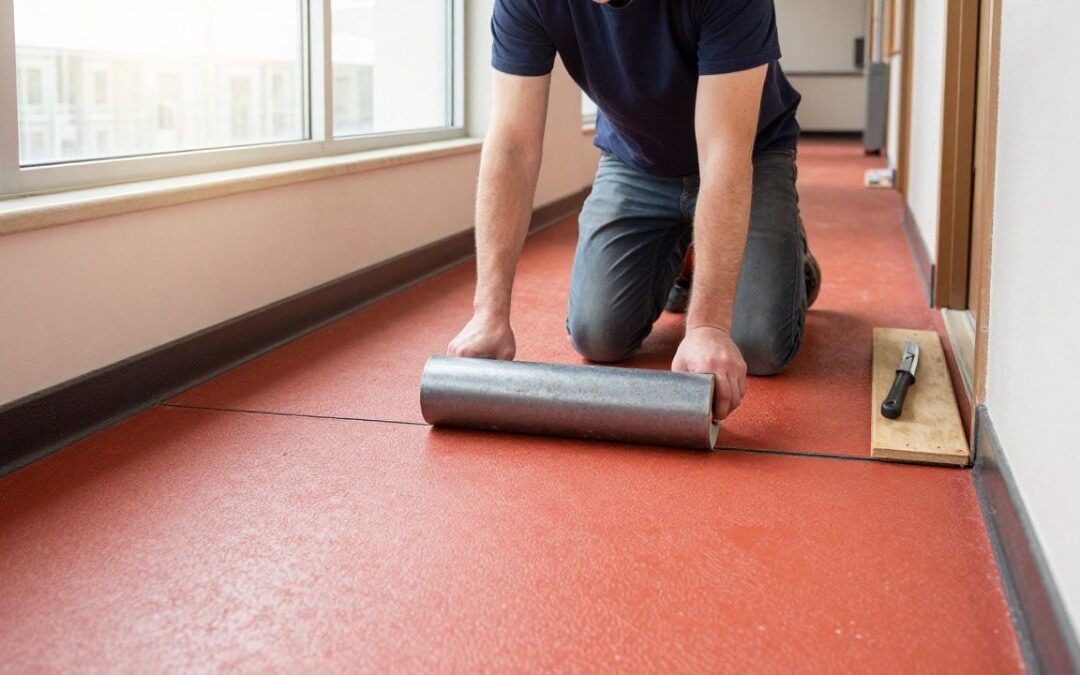
Last Updated: 8 November 2026
Quick Summary
The five best non-slip flooring choices for schools are safety vinyl sheet, slip-resistant luxury vinyl tile, rubber flooring, linoleum and carpet tiles. Safety vinyl sheet and rubber suit wet areas such as entrances, kitchens and gyms, while linoleum and carpet tiles suit dry classrooms.
- Judge slip resistance by the wet rating, not the dry figure, for entrances and kitchens.
- A pendulum test value of 36 or above is generally regarded as low slip potential on level surfaces.
- Rubber flooring is usually the strongest performer for entrances, gyms and kitchens.
- Carpet tiles belong only in dry teaching spaces and should be kept out of wet areas.
- Flush thresholds between zones matter, since raised strips between floor types cause trips.
Table of Contents
- Why Slip Resistance Matters Most in School Buildings
- How Slip Resistance Is Tested and Rated
- Choice 1: Safety Vinyl Sheet
- Choice 2: Luxury Vinyl Tile (LVT) With Slip-Resistant Finish
- Choice 3: Rubber Flooring for Entrances, Gyms and Kitchens
- Choice 4: Linoleum for Classrooms and Quieter Areas
- Choice 5: Carpet Tiles for Dry Teaching Spaces
- Matching Each Flooring Choice to School Hazards
- Frequently Asked Questions
If you manage a school, you already know that a wet corridor can turn into a serious incident in seconds, which is why choosing the right non-slip flooring matters so much. Slips and trips are among the most common causes of injury on school premises, and the floor you choose plays a large part in preventing them. Commercial flooring is installed across education, healthcare and hospitality, and school business managers often ask which non-slip flooring they should actually choose.
This guide compares five practical options, covering where each works best, what it costs to live with, and where it falls short. The aim is to help you match the flooring to the hazards in each part of the building, not to crown a single winner.
Why Slip Resistance Matters Most in School Buildings
Schools combine high footfall, mixed footwear, wet entrances and young users who run, climb and rarely look where they are going. To see how durable hygienic flooring options fit alongside slip safety, read on. A floor that performs well in an office can become a liability in a school within a single term.
The practical priorities are usually these:
- Wet-area entrances, where rain and snow are carried in on shoes
- Corridors and stairs, where people move quickly between lessons
- Kitchens and dining halls, where spills are frequent and sometimes greasy
- Gyms and changing rooms, where floors are wet by design
Our view is that slip resistance should be the first filter, and comfort or colour should come after. A pleasant floor that fails in the rain is the wrong floor.
How Slip Resistance Is Tested and Rated
Slip resistance is measured, not guessed, and the test used should match the surface and the conditions it will face. In the UK, the two methods you will see most often in school flooring specifications are the pendulum test and the ramp test, and they answer different questions.
The pendulum test drops a spring-loaded rubber slider onto the floor and measures how much energy is lost to friction. The result is the pendulum test value (PTV). As a rule of thumb, a PTV of 36 or above is generally regarded as low slip potential on level surfaces, while values below 25 indicate a higher risk. The test can be run dry or wet, and the wet figure is the one that matters in entrances, toilets, kitchens and changing rooms.
The ramp test places a person walking in standard footwear on an inclined, lubricated surface and increases the angle until they slip. It produces a ramp test value (RTV) and is often used for products destined for wet or contaminated areas. A higher RTV means the floor holds grip on a steeper slope.
When comparing products, check:
- Which test method was used, and whether the declared rating is dry, wet or both
- Whether the rating was measured on the product as installed, not only on a laboratory sample
- How the rating holds up after cleaning, since some finishes lose grip once detergent residue builds up
- Whether the product has been tested with the contaminants it will actually meet, water, grease, soap or food
Many suppliers quote a dry rating first because it flatters the product. Always ask for the wet figure before you compare two products side by side, and ask for the test report rather than a marketing claim. A common pattern is for a floor to pass on a clean sample but drop below the threshold once it has been mopped with the wrong product for a term.
Watch out: a high PTV on a dry sample tells you very little about how the same floor will behave at a rainy entrance in January. Specify the wet rating and the cleaning regime together, or the number on the datasheet will not reflect the floor pupils actually walk on.
Choice 1: Safety Vinyl Sheet
Safety vinyl sheet is a continuous, roll-out flooring with a textured surface designed for slip resistance. It is widely used in schools because it is seamless, which limits where water and dirt can collect.
Best for: Wet-area entrances, corridors and kitchens where hygiene and slip resistance both matter.
Pros, Cons and Typical Pricing
Pros
- Few joints, so fewer places for dirt and moisture to gather
- Good slip performance when the correct grade is specified
- Easy to clean with standard methods
Cons
- Needs careful subfloor preparation, or imperfections will show through
- Repairs can leave a visible patch
- Lower-grade sheet can lose its texture faster under heavy use
Pricing depends on the grade, room size, subfloor condition and fitting requirements. Please contact RW Flooring for a quote based on your site.
Choice 2: Luxury Vinyl Tile (LVT) With Slip-Resistant Finish
LVT is made of rigid or flexible tiles or planks, often with a realistic wood or stone look. A slip-resistant finish is available on commercial grades, and it gives schools more design options than sheet vinyl.
Pros
- Wide range of designs, useful for creating zones within a school
- Tiles can be replaced individually if one is damaged
- Good durability in high-traffic corridors
Cons
- Grout-free joints still create lines where water can sit if they are not sealed well
- Not every LVT product carries a suitable slip rating, so check before ordering
LVT is a sensible choice when you want the look of timber or stone without its maintenance demands.
Choice 3: Rubber Flooring for Entrances, Gyms and Kitchens
Rubber flooring is one of the most grippy options available. It is dense, resilient and performs well where impact and moisture are both present.
Pros
- Strong slip resistance, including in wet conditions
- Absorbs impact, which suits gyms and play areas
- Long-lasting under heavy use
Cons
- Less suited to classrooms, where the look and feel can feel heavy
- Can be harder to clean thoroughly in textured versions
- Colour and design choice is more limited than vinyl
For entrances, gyms and kitchens, rubber is often the strongest performer. For a quieter classroom, it is usually the wrong fit.
Choice 4: Linoleum for Classrooms and Quieter Areas
Linoleum is a natural material made from linseed oil, cork dust and other plant-based components. It has a softer feel underfoot than vinyl and is often chosen for its low environmental impact.
Pros
- Natural materials with a good environmental profile
- Comfortable underfoot, which suits long teaching days
- Pleasant, understated appearance
Cons
- Needs regular sealing and maintenance to keep its slip resistance
- Not ideal for constantly wet areas
- Can be more demanding to maintain than synthetic options
Linoleum is generally suited to classrooms, libraries and quieter corridors, where spills are less frequent. It is less suitable for entrances.
Choice 5: Carpet Tiles for Dry Teaching Spaces
Carpet tiles offer comfort, acoustic benefit and easy replacement. They suit dry teaching spaces where noise and warmth matter, but they are not a slip solution for wet areas.
Pros
- Reduces echo and background noise in classrooms
- Individual tiles can be swapped out if stained or worn
- Comfortable for younger pupils sitting on the floor
Cons
- Absorbs spills and can harbour dirt and allergens if not cleaned regularly
- Not appropriate for wet entrances, kitchens or changing rooms
- Surface wear can reduce grip over time
Carpet tiles belong in dry, teaching-focused rooms. Keep them out of anywhere water is regularly present.
Matching Each Flooring Choice to School Hazards
No single flooring type is right for every part of a school. Before you match options to each zone, you can review the long-term benefits of durable school flooring. The most effective approach is to match the floor to the hazard in each area, then plan how the zones meet, because transitions are where many slips and trips actually happen.
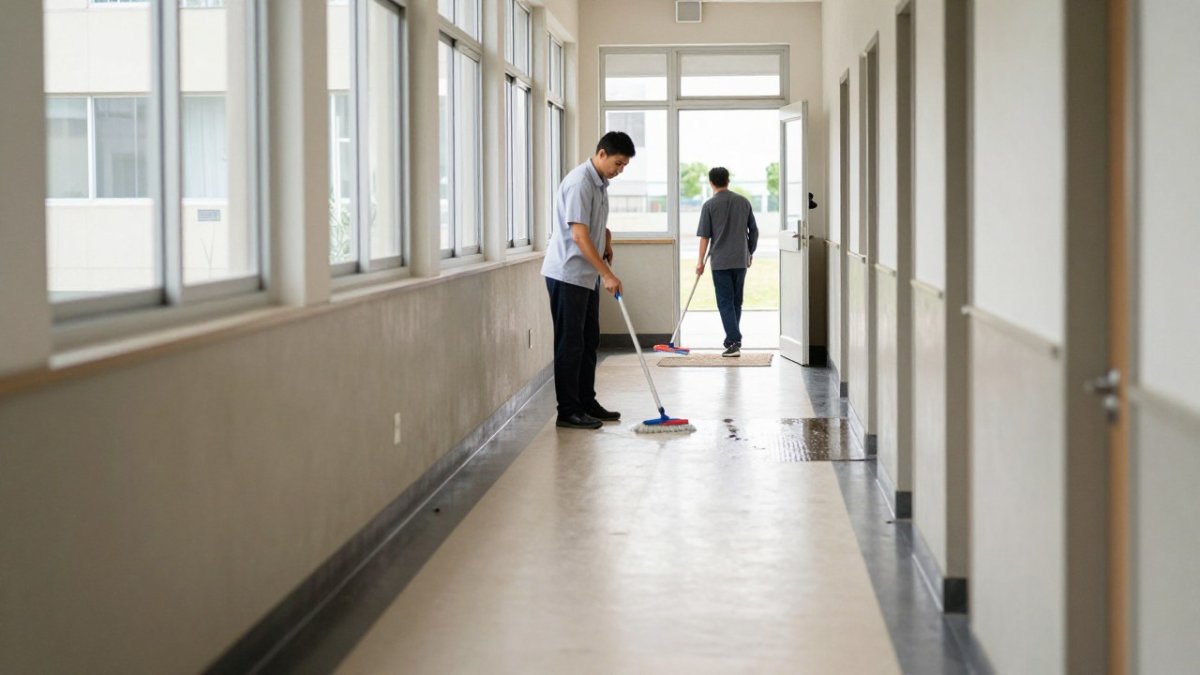
| Area | Main hazard | Suitable choice | Why it fits |
|---|---|---|---|
| Main entrance | Wet footwear, grit, rainwater | Rubber or safety vinyl sheet | High wet grip and a surface that tolerates grit |
| Corridors | High footfall, running, sudden turns | Safety vinyl sheet or LVT | Continuous surface with reliable wet rating |
| Stairs and landings | Speed, poor visibility, worn nosings | Safety vinyl with contrasting nosing | Grip plus visual definition at the edge |
| Kitchen and dining | Spills, grease, frequent mopping | Safety vinyl sheet or rubber | Resists grease and survives repeated cleaning |
| Gym and changing rooms | Wet by design, impact | Rubber flooring | Grippy when wet and absorbs impact |
| Toilets and washrooms | Soap, water, small spaces | Safety vinyl sheet | Seamless and easy to clean |
| Science rooms | Spills, chemical splash | Safety vinyl sheet or specialist chemical-resistant sheet | Cleanable and resistant to spills |
| Classrooms | Noise, comfort, dry use | Linoleum or carpet tiles | Comfort and acoustic benefit where water is absent |
Start with a site walk-through. Note where water enters, where spills happen and which rooms see the most movement. Then specify the flooring for each zone rather than one product across the whole building.
Two practical points are easy to overlook. First, transitions between zones need a flush, well-fixed threshold; a raised strip between a rubber entrance and a vinyl corridor is a trip hazard in its own right. Second, accessibility matters as much as grip: a floor that is very rough underfoot can be difficult for wheelchair users and for pupils with mobility aids, so aim for a surface that is slip-resistant without being unnecessarily aggressive.
Installation and whole-life cost also belong in the decision. Once you have chosen a flooring type, our guide on planning school flooring installation explains how the work can be scheduled and managed. Sheet vinyl and rubber generally need a sound, dry subfloor, whereas carpet tiles can often be laid with less disruption. Over a ten-year horizon, the cheaper product to buy is not always the cheaper to own once repairs, replacement and cleaning are counted.
Whichever option you choose, subfloor preparation and regular cleaning determine how well it performs. Ask your installer how the floor will be maintained, because a non-slip finish cleaned with the wrong product can lose its grip. If you would like help matching these options to your building, you can request a quote from RW Flooring to get started. You can also find a flooring company in London experienced with commercial projects.
Frequently Asked Questions
What is the best non-slip flooring for schools?
There is no single best option, because the right choice depends on the area. Safety vinyl sheet and slip-resistant luxury vinyl tile suit most corridors, classrooms and entrances because they are non-porous and easy to clean. Rubber flooring suits entrances and gyms, while carpet tiles work only in dry teaching spaces. Ask your supplier for slip-resistance ratings that match the wet or dry conditions in each area, and check the manufacturer’s test data before you specify a product for a wet zone.
Which flooring is safest for school corridors?
Corridors carry the heaviest foot traffic and the most wet footfall from entrances, so they need a surface with a reliable slip rating and good wear resistance. Safety vinyl sheet with a textured surface and slip-resistant luxury vinyl tile are the most common choices. Joint-free sheet vinyl reduces dirt traps at the edges, which helps keep the surface safer over time.
Is vinyl flooring suitable for schools?
Yes. Commercial vinyl, including safety vinyl sheet and luxury vinyl tile, is widely used in schools because it is durable, comfortable underfoot and simple to clean. Choose a product with a suitable slip rating for the area and check that the installation includes proper subfloor preparation, since poor preparation causes joints to lift and creates trip hazards.
How do you maintain non-slip school flooring?
Clean with a pH-neutral detergent recommended by the manufacturer and rinse thoroughly, because residue reduces slip resistance. Remove grit with regular dry sweeping, and deal with spills immediately. Avoid polishes or sealers unless the manufacturer approves them, as some finishes make a floor more slippery. Keep a written cleaning schedule for each area and review it after any change in use.
