
Last Updated: 28 October 2026
Quick Summary
Non-slip flooring is a floor surface engineered to resist slipping when wet, measured by a pendulum test rating rather than by how rough it feels underfoot. Specify it by its tested wet slip rating, matched to how wet each bathroom zone actually gets, and avoid polish or wax on slip-rated surfaces.
- A floor can feel textured and still rate badly, so always check the tested wet rating.
- Safety vinyl or high-rated textured tile suits constantly wet shower enclosures.
- The subfloor must be clean, dry and level before any flooring is laid.
- Use a neutral pH cleaner and never apply polish or wax to slip-rated surfaces.
- Out-of-hours fitting is available to minimise disruption to hotel guests.
Table of Contents
- What You Need to Know Before Choosing Non-Slip Flooring
- Non-Slip Bathroom Tiles: Where They Work and Where They Don’t
- Slip-Resistant Flooring for Wet Areas: Matching the Rating to the Room
- Hotel Bathroom Flooring Installation: Steps That Decide the Result
- Hotel Bathroom Flooring Maintenance: Keeping Grip After Opening
- Common Mistakes to Avoid
- Request a Flooring Survey for Your Hotel Bathrooms
- Frequently Asked Questions
What You Need to Know Before Choosing Non-Slip Flooring
Choosing the right non slip flooring for hotel bathrooms starts with one hard truth: a bathroom floor that looks flawless can still fail a guest in seconds. At RW Flooring, we have fitted commercial floors for over 15 years.
Non-slip flooring is a floor surface engineered to resist slipping when wet, measured by a pendulum test rating rather than by how rough it feels underfoot. A floor can feel textured and still rate badly. That gap between feel and fact is where most specification mistakes begin.
Three things decide whether a hotel bathroom floor is safe:
- The slip rating of the surface, wet, not dry
- The subfloor beneath it, which controls movement and water ingress
- The cleaning regime, which either preserves grip or quietly destroys it
Non-Slip Bathroom Tiles: Where They Work and Where They Don’t
Non-slip bathroom tiles perform best in shower enclosures and around basins, where water sits on the surface and drainage is direct. They are less reliable in small, heavily trafficked bathrooms where grout lines collect soap and biofilm.
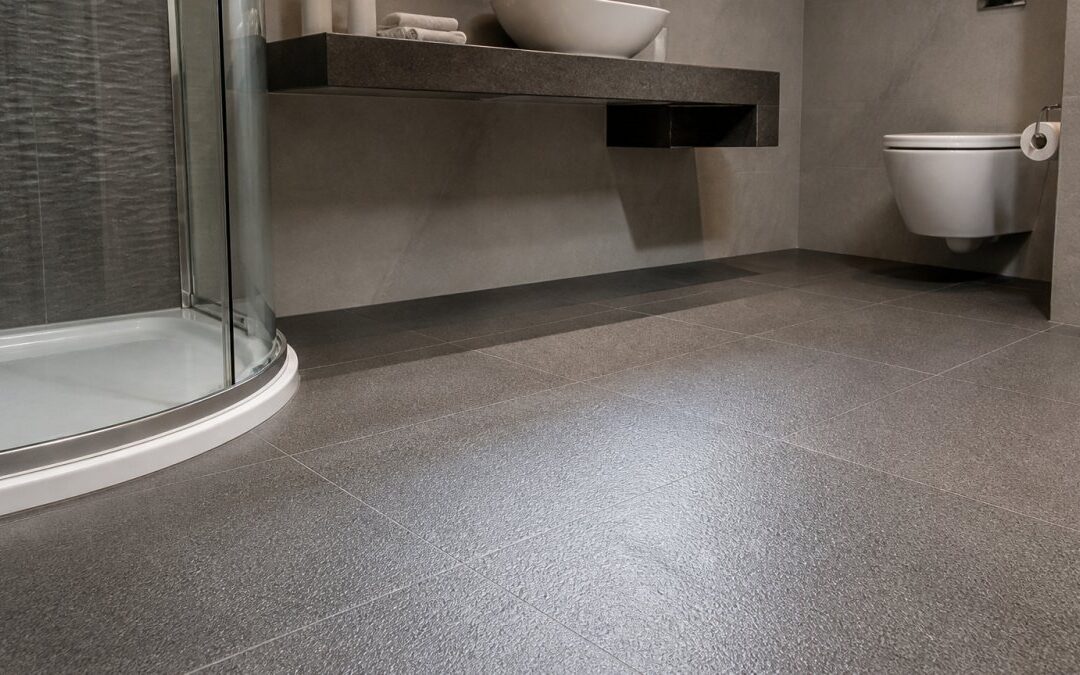
The critical detail is the finish, not the material. A matt, textured porcelain tile with a tested wet rating gives dependable grip. A polished or satin tile of the same material can be genuinely dangerous under a wet foot, and many hotel refurbishments inherit exactly that problem from the previous fit-out.
Where tiles fall short:
- Grout joints trap residue and reduce grip over time
- Small format tiles mean more joints, more cleaning, more failure points
- Chipped or worn glaze can expose a slicker layer beneath
Sheet vinyl and safety vinyl avoid the grout problem entirely.
Slip-Resistant Flooring for Wet Areas: Matching the Rating to the Room
Slip-resistant flooring for wet areas should be specified by its tested wet slip rating, matched to how wet the floor actually gets. A shower floor and a dry dressing area do not need the same rating, and over-specifying can make cleaning harder than it needs to be.
The Health and Safety Executive guidance on slip risks treats slips as one of the most common causes of workplace injury, and the same logic applies to guest bathrooms. Wet floors need demonstrably better grip than dry ones.
A practical way to match surface to zone:
| Bathroom zone | Wetness level | Surface that suits it |
|---|---|---|
| Shower enclosure | Constantly wet | Safety vinyl or high-rated textured tile |
| Floor around bath | Splash and pooling | Textured tile or safety vinyl |
| Basin and vanity area | Occasional splashes | Matt tile with tested wet rating |
| Dressing and dry zone | Rarely wet | Matt tile or sealed vinyl |
Hotel Bathroom Flooring Installation: Steps That Decide the Result
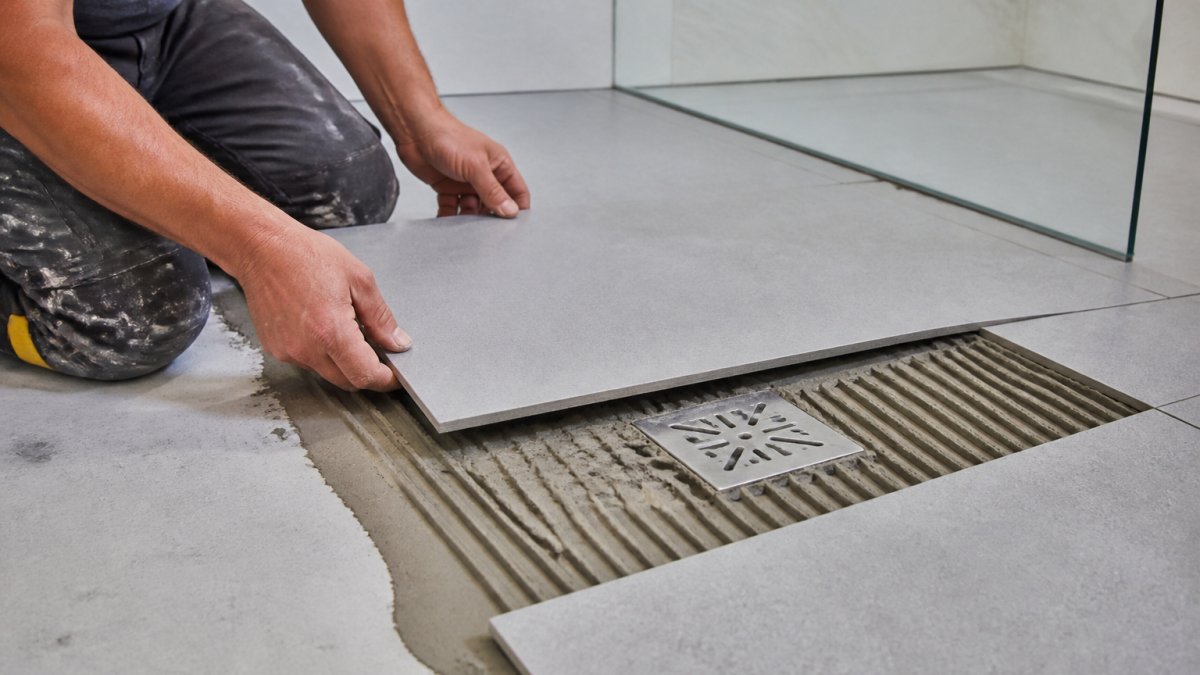
Hotel bathroom flooring installation succeeds or fails before the first tile goes down. Subfloor preparation and moisture control decide whether the finished floor stays flat, bonded and safe for years.
Subfloor Preparation
The subfloor must be clean, dry and level. Any movement, damp or contamination in the base will telegraph through to the surface and break the bond. Trapped moisture under a sealed floor has nowhere to go.
Fitting Around Guests
Hotel bathrooms cannot be out of action for long. Out-of-hours fitting is available to minimise disruption.
Hotel Bathroom Flooring Maintenance: Keeping Grip After Opening
- Neutral pH cleaner, diluted as directed
- No polish or wax on slip-rated surfaces
- Regular deep cleaning of grout lines and edges
- Prompt replacement of worn or lifted sections
HSE’s advice on preventing slips and trips stresses that cleaning regimes must match the floor’s rating, not the other way round. If housekeeping changes products, the specification needs revisiting.
Common Mistakes to Avoid
- Specifying a floor by appearance instead of tested wet rating
- Laying new flooring over a damp or uneven subfloor
- Using polish on a slip-rated surface and destroying the grip
- Choosing small tiles that multiply grout lines and cleaning burden
- Leaving no maintenance plan, so grip fades unnoticed
Request a Flooring Survey for Your Hotel Bathrooms
At RW Flooring, we provide complete flooring solutions from subfloor preparation to final installation. Out-of-hours fitting is available to minimise disruption, and we have over 15 years of industry experience.
Request a quote from RW Flooring for your flooring project.
Frequently Asked Questions
What is the best non-slip flooring for a hotel bathroom?
There is no single best option, because the right choice depends on the room.
What slip-resistance rating should hotel bathroom flooring have?
Ask for the wet barefoot test result, not just the dry one, because guests use hotel bathrooms barefoot. Flooring suppliers should provide pendulum test values and the barefoot ramp rating for the product. Specify a floor that performs well when wet and confirm the rating in writing before ordering. A product that passes on a dry test can still be slippery once soap and water are on it, so the wet result is the one that matters for guest safety.
Is vinyl flooring a good choice for hotel bathrooms?
Safety vinyl is one of the most practical choices for hotel bathrooms. Sheet vinyl is seamless, so water cannot track through joints into the subfloor, and it is warm and quiet underfoot. It is also faster to fit than tiling, which shortens downtime between lettings. The key is to specify a safety vinyl with a textured, slip-resistant surface rather than a smooth domestic vinyl, and to have the subfloor prepared properly so the sheet does not lift at edges or around fittings.
How do you keep hotel bathroom floors slip-resistant?
Grip fades when cleaning leaves a film. Use the dilution rate on the product label, rinse thoroughly, and avoid polish or wax on safety flooring, which coats the texture and reduces friction. Check sealant around shower trays and toilet bases during routine housekeeping inspections, and replace worn or lifting sections promptly. A short monthly walk-round with a torch will catch pooling water, loose edges and worn areas before a guest does.
A hotel bathroom floor is only as good as the survey behind it. RW Flooring brings over 15 years of commercial experience, complete subfloor preparation and out-of-hours fitting to every project, so your rooms stay safe and open. Request a quote and let us survey your bathrooms before anything is specified.
