
Last Updated: 23 October 2026
Quick Summary
Restaurant flooring cost varies dramatically depending on material choice, installation complexity, and site conditions. Material selection is the primary driver, with vinyl, ceramic tile, epoxy resin, and polished concrete each commanding vastly different prices and offering distinct durability profiles.
- Vinyl flooring material represents roughly 40-50% of total installation cost, with labour accounting for the remainder.
- Subfloor preparation is where costs often escalate, as damaged or uneven floors require repair before installation.
- Vinyl flooring typically installs in 1-3 days, whilst ceramic tile requires 3-7 days and epoxy resin spans 2-4 days.
- Budget flooring in busy kitchens may need replacement within 3-5 years, making durable options more economical long-term.
- Request itemised quotes that break down material, labour, and additional costs separately, and clarify what’s included in pricing.
Table of Contents
- Restaurant Flooring Cost Per Square Metre: Key Factors
- Commercial Flooring Cost Per Square Metre by Material Type
- Commercial Vinyl Flooring Installation Cost Breakdown
- Restaurant Flooring Options and Their Price Implications
- Restaurant Flooring Installation Time and Project Scheduling
- Hidden Costs and Budget Considerations
- Getting an Accurate Quote for Your Project
- Frequently Asked Questions
Restaurant Flooring Cost Per Square Metre: Key Factors
The restaurant flooring cost varies dramatically depending on material choice, installation complexity, and site conditions. Understanding what drives these costs helps you budget accurately and avoid costly surprises mid-project.
Several factors influence the final price per square metre. Material selection is the primary driver. Labour costs depend on subfloor preparation and installation difficulty. Site access, existing flooring removal, and project scheduling also affect the total spend.
RW Flooring has helped hospitality managers navigate these decisions for over 15 years. The difference between a budget-conscious choice and a durable investment often comes down to understanding what you’re actually paying for.
The real cost isn’t just the material price. Hidden expenses emerge during installation. Poor subfloor preparation leads to premature failure. Rushed timelines inflate labour costs. Understanding these factors before you get quotes prevents budget overruns.
Request quotes from multiple contractors and ask specifically what’s included in their per-square-metre pricing. Some quotes exclude subfloor preparation or removal of existing flooring, these omissions create nasty surprises later.
Commercial Flooring Cost Per Square Metre by Material Type
Different materials command vastly different prices and offer different durability profiles. Vinyl, polished concrete, ceramic tile, and epoxy resin each have distinct cost structures and performance characteristics.
Vinyl flooring offers affordability and easy maintenance. It suits restaurants where slip resistance and hygiene matter. Installation is straightforward, which keeps labour costs lower than other options.
Polished concrete costs less upfront but requires specialist finishing. It’s durable and looks modern in contemporary restaurant settings. However, it demands professional installation to achieve a proper finish.
Ceramic tile provides excellent durability and hygiene compliance. Grout lines require regular cleaning in food environments. Installation labour is higher because each tile must be placed individually.
Epoxy resin flooring delivers seamless, hygienic surfaces ideal for kitchens. The material itself costs more than vinyl or basic concrete. Installation requires specialist contractors, which increases labour expense.
The cost per square metre varies significantly across these materials. Budget options start lower but may need replacement sooner. Premium materials cost more initially but often prove more economical over ten years.
The cheapest material per square metre rarely delivers the best value over time. Restaurants with high foot traffic benefit from investing in durable options that withstand constant use and frequent cleaning.
Different flooring materials command vastly different prices and offer distinct durability profiles for restaurant environments.
| Material | Key Characteristics | Best For |
|---|---|---|
| Vinyl flooring | Affordable, easy maintenance, straightforward installation | Slip resistance and hygiene |
| Polished concrete | Lower upfront cost, modern appearance, requires specialist finishing | Contemporary restaurant settings |
| Ceramic tile | Excellent durability, hygiene compliant, higher labour costs | Durability and professional appearance |
| Epoxy resin | Seamless, hygienic, higher material and labour costs | Kitchen environments requiring cleanliness |
Commercial Vinyl Flooring Installation Cost Breakdown
Vinyl flooring is popular in restaurants because it balances cost, durability, and maintenance. Understanding what makes up the installation cost helps you evaluate quotes fairly.
The material itself represents roughly 40-50% of the total installation cost. Labour for preparation, fitting, and finishing accounts for the remainder. Subfloor condition dramatically affects how long installation takes.
Subfloor preparation is where costs often escalate. If the existing floor is damaged or uneven, contractors must repair or level it before vinyl can be installed. This work is essential, skipping it leads to premature failure and costly rework.
Removal of existing flooring adds time and expense. If you’re replacing old vinyl or tile, disposal costs apply. Asbestos-containing materials require certified removal, which increases costs significantly.
Installation method affects labour time. Loose-lay vinyl installs faster than fully adhered vinyl. Welded seams in high-traffic areas take longer but provide superior water resistance.
Site access and logistics impact scheduling and cost. If your restaurant operates 24/7, out-of-hours fitting becomes necessary. This flexibility commands a premium but minimises disruption to service.
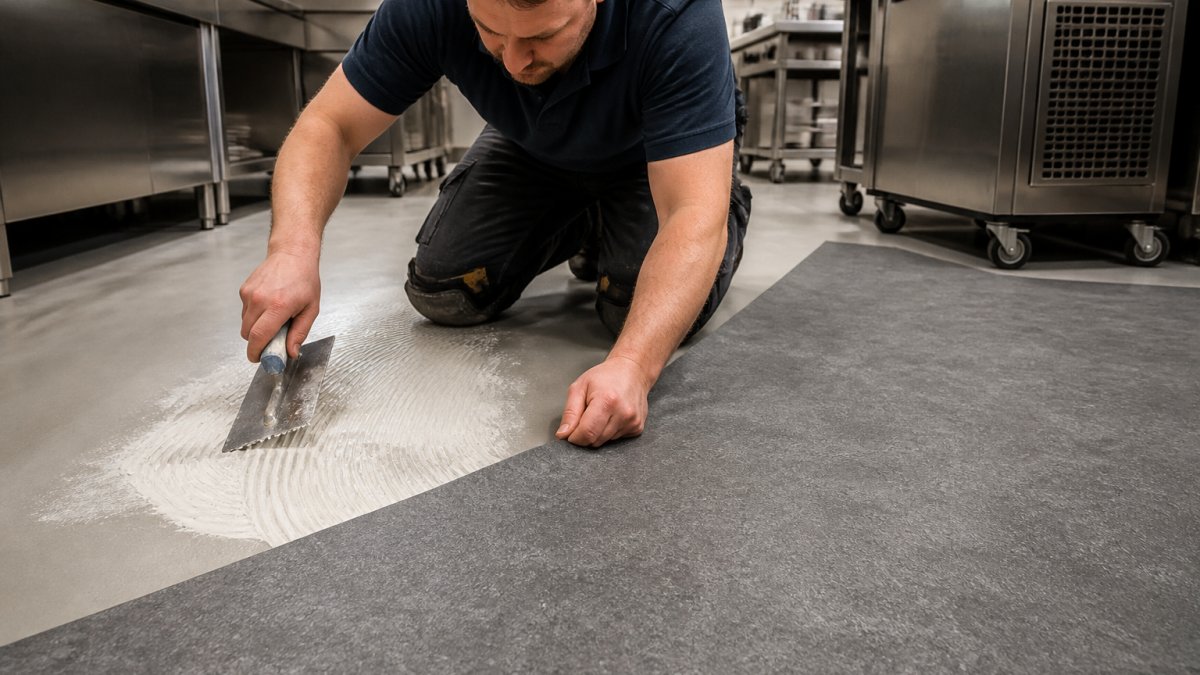
RW Flooring schedules installation outside operating hours to keep your kitchen running. This approach requires careful planning but minimises disruption to service.
Restaurant Flooring Options and Their Price Implications
Choosing the right flooring material shapes both your immediate costs and long-term maintenance expenses. Each option suits different restaurant environments and operational demands.
Slip-resistant vinyl is the most common choice in commercial kitchens. It resists moisture, cleans easily, and meets hygiene standards. Installation is straightforward, keeping labour costs reasonable. Over time, it holds up well in high-traffic areas but eventually shows wear.
Commercial-grade ceramic tile provides maximum durability and a professional appearance. Grout lines require regular attention in food environments. Installation takes longer than vinyl because each tile must be positioned carefully. The initial cost is higher, but the lifespan often exceeds vinyl by several years.
Epoxy resin creates seamless, hygienic surfaces with no grout lines to trap bacteria. It’s ideal for open-plan kitchens where cleanliness is critical. The material and installation both cost more than vinyl or tile. However, the seamless design simplifies cleaning and reduces maintenance time.
Polished concrete suits modern restaurant aesthetics and costs less than tile or epoxy initially. It requires professional sealing and periodic maintenance. In kitchens with heavy water exposure, concrete can develop staining and requires more frequent care than sealed alternatives.
Rubber flooring offers comfort underfoot and excellent durability. It’s less common in kitchens but works well in dining areas with high foot traffic. Cost falls between vinyl and ceramic tile.
Choosing the cheapest option often backfires. Budget flooring in a busy kitchen may need replacement within 3-5 years. Durable options typically justify their higher initial cost through longevity and reduced maintenance.
Restaurant Flooring Installation Time and Project Scheduling
Installation duration depends on material choice, subfloor condition, and site complexity. Understanding realistic timelines helps you plan operations around the project.
Vinyl flooring typically installs in 1-3 days for a standard restaurant space. Simple removal and preparation take the longest. If subfloor work is needed, add 2-5 days depending on the extent of repairs.
Ceramic tile requires 3-7 days for most installations. Each tile must be set individually, which takes time. Grout curing adds another 24-48 hours before the space can be used.
Epoxy resin installation spans 2-4 days depending on area size. Surface preparation is critical and takes as long as application. Curing time means you cannot use the space for 48-72 hours after completion.
Polished concrete finishing takes 3-5 days. Multiple grinding and sealing stages cannot be rushed. The final coat requires 24-48 hours to cure fully.
Site access significantly affects scheduling. If your restaurant operates during the day, installation must happen at night or on closed days. Out-of-hours work requires specialist contractors and costs more but keeps your business running.
Seasonal factors matter too. Summer holidays allow longer project windows. During peak trading periods, minimising downtime becomes critical, which may increase contractor costs.
Hidden Costs and Budget Considerations
Beyond material and labour, several expenses catch operators off guard. Identifying these early prevents budget overruns and project delays.
Subfloor repair is the most common hidden cost. Old concrete may have cracks or uneven sections. Moisture issues require damp-proof membranes before new flooring installs. These repairs are non-negotiable, skipping them guarantees premature failure.
Removal and disposal of existing flooring adds expense. Asbestos-containing materials require certified removal specialists, which costs significantly more. Even standard flooring removal takes time and disposal space.
Contingency buffer protects against unexpected issues. Site conditions often reveal problems hidden beneath old flooring. Building a 10-15% contingency into your budget prevents project delays when surprises emerge.
Project management fees apply if you’re coordinating multiple trades. Electrical work, plumbing adjustments, or structural repairs may be needed alongside flooring installation. Coordinating these adds complexity and cost.
Temporary solutions during installation may be necessary. If your kitchen must stay operational, temporary flooring or alternative work areas cost money. Planning these logistics upfront prevents expensive last-minute arrangements.
According to Health and Safety Executive guidance on workplace flooring, proper installation and maintenance prevent slip hazards and injury claims. Cutting corners on installation quality creates liability risks that far exceed the savings.
Hospitality operators who prioritise long-term value over initial cost savings and plan installation during slower trading periods to minimise disruption.
Getting an Accurate Quote for Your Project
A reliable quote provides clarity on costs and prevents surprises. Knowing what to request ensures you compare apples with apples across multiple contractors.
Ask for itemised quotes that break down material, labour, and additional costs separately. This transparency shows exactly where your money goes and makes comparing quotes straightforward.
Request site surveys before final quotes. Contractors should visit your space to assess subfloor condition, existing flooring, and site access. Quotes based on phone conversations often underestimate complexity.
Clarify what’s included. Does the quote cover removal of existing flooring? Subfloor preparation? Disposal? These items significantly affect total cost. Vague quotes hide surprises.
Ask about scheduling flexibility. If out-of-hours installation is essential, confirm the contractor can accommodate your operational needs. Some contractors specialise in night work; others don’t.
Verify contractor experience. Commercial kitchen flooring differs from general flooring work. Ask for references from similar projects. Request photos of completed installations.
Confirm warranty terms. Reputable contractors guarantee their work for a specified period. Understand what the warranty covers and what voids it.
RW Flooring provides detailed quotes after site assessment. They outline every cost component and timeline clearly. Their 15 years in commercial flooring means they anticipate challenges other contractors miss, which keeps projects on budget and on schedule.
British Standards Institution guidance on commercial flooring specifications outlines durability and safety standards for food environments. Ensure any quote references compliance with these standards.
Restaurant flooring is a significant investment that affects operations, safety, and customer experience daily. The cost per square metre varies based on material, installation complexity, and site conditions. Understanding these factors lets you make informed decisions rather than chasing the lowest quote.
Quality installation from experienced contractors protects your investment. RW Flooring has delivered professional commercial flooring solutions across hospitality, healthcare, and education for over 15 years. We handle everything from subfloor preparation to final finishing, with flexible out-of-hours scheduling that minimises disruption to your business.
Request a Quote today and get a detailed assessment of your restaurant flooring project.
Frequently Asked Questions
How much does restaurant flooring cost per square metre?
Restaurant flooring cost per square metre varies significantly based on material type, subfloor condition, and installation complexity. Vinyl typically ranges lower than stone or specialist safety flooring. Labour costs and site preparation also affect the total. Contact RW Flooring for a detailed quote tailored to your specific requirements, as pricing depends on your chosen material, room dimensions, and project timeline.
What is the cheapest flooring option for a restaurant?
Vinyl sheet flooring generally offers the most cost-effective solution for restaurants. However, ‘cheapest’ doesn’t always mean best value. Vinyl provides durability for high-traffic areas, easy cleaning for hygiene compliance, and reasonable lifespan. More affordable options may require earlier replacement or prove costlier during maintenance. Discuss your budget and long-term requirements with RW Flooring to find the right balance between initial cost and durability.
How long does it take to install flooring in a restaurant?
Installation time depends on room size, material type, and subfloor preparation needs. Smaller areas may take one to two days; larger restaurant spaces typically require three to seven days. Out-of-hours fitting minimises disruption to service. RW Flooring offers flexible scheduling to work around your operating hours. Accurate timescales are provided during the quotation process once site conditions are assessed.
What extra costs should I budget for when replacing restaurant flooring?
Beyond material and labour, budget for subfloor repair or levelling, removal of old flooring, underlay, sealants, and edge trims. Healthcare facilities may need additional hygiene treatments. Specialist finishes for slip resistance or thermal properties add cost. Disruption to operations during installation may require temporary closures or staffing adjustments. RW Flooring’s comprehensive approach includes subfloor preparation to final installation, but a detailed site survey identifies all necessary work before pricing.
